Hand Tools or Power Tools in a Small Shop: A Calm Comparison and How to Decide
For centuries furniture and everyday wooden objects were made with scraping, planing, sawing, and hammering by hand. The rise of powered machinery in the 19th and 20th centuries changed workshops, allowing faster production and different scales of design. Today many makers inhabit an in-between: small shops where both hand and power tools have a place. Understanding the history of each approach helps clarify what they offer in practice.
Two approaches, briefly placed in time
Hand-tool traditions predate industrial machinery. Measures and techniques were shaped by the limits of muscle, simple machines, and apprenticeships: planes honed to a whisper, saws set for a smooth line, chisels with a particular shoulder and feel. The craft emphasized material knowledge, patience, and portability.
Power tools arrived with the industrial revolution and continued to evolve through the 20th century. Lathes, band saws, and bench grinders extended what a single pair of hands could do, introducing speed and repeatability. In small shops today, modern electric tools let makers shorten rough work, multiply output, or try shapes difficult with only hand tools.
Comparing the approaches
Speed and efficiency
- Power tools: In most cases, faster for heavy stock removal, repetitive cuts, and initial dimensioning. They shorten project time when many identical parts are needed.
- Hand tools: Slower on large tasks but often faster for certain small, precise adjustments—smoothing a joint, trimming a dovetail, or adjusting a fit in place.
Control and finish
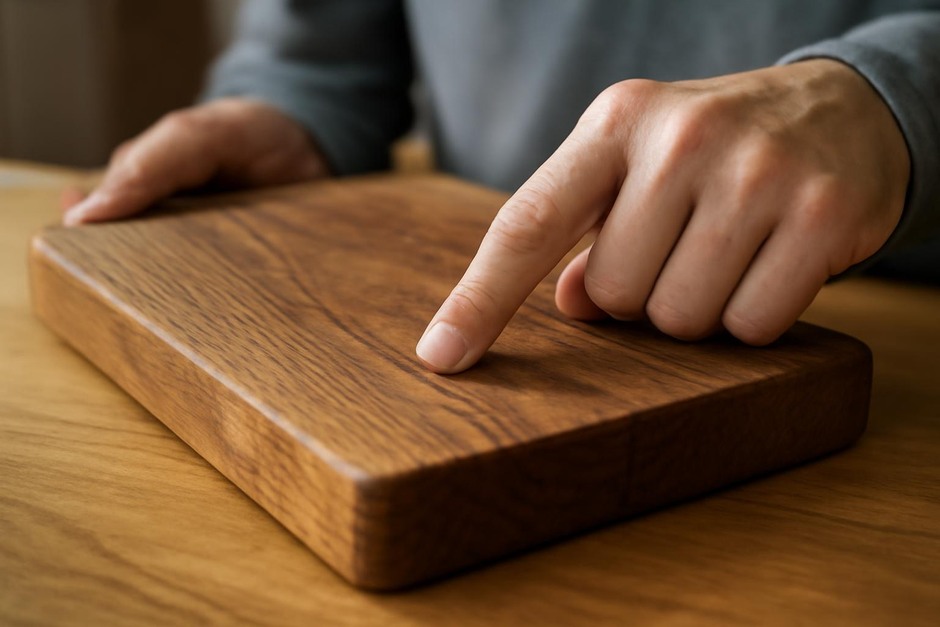
- Hand tools: Offer tactile feedback. A plane or chisel tells you about grain direction and tear-out as you work; that immediate information helps produce a refined surface with less sanding.
- Power tools: Can produce very true surfaces, but they remove feedback. Some finishes will require more sanding or careful setup to avoid machine marks.
Learning curve and skill
- Hand tools: Reward practice. Learning sharpening, chip control, and measured cutting is an investment that builds a durable skill set.
- Power tools: Also require skill—setup, jigs, safe operation—but many machines reduce the need for the fine touch that hand tools demand.
Space, noise, and dust
- Power tools: Require more space, dust collection, and produce more noise. They may be impractical in shared or small spaces without mitigation.
- Hand tools: Compact, quieter, and often cleaner; they suit apartments, garages, or community studios where minimizing disruption matters.
Cost and maintenance
- Power tools: Higher initial outlay for quality machines, plus electricity and more complex maintenance. Parts and repairs can be costlier.
- Hand tools: Lower-cost entry in many cases. Maintenance focuses on sharpening and occasional handle or blade care—skills that are straightforward to learn.
Aesthetic and craft values
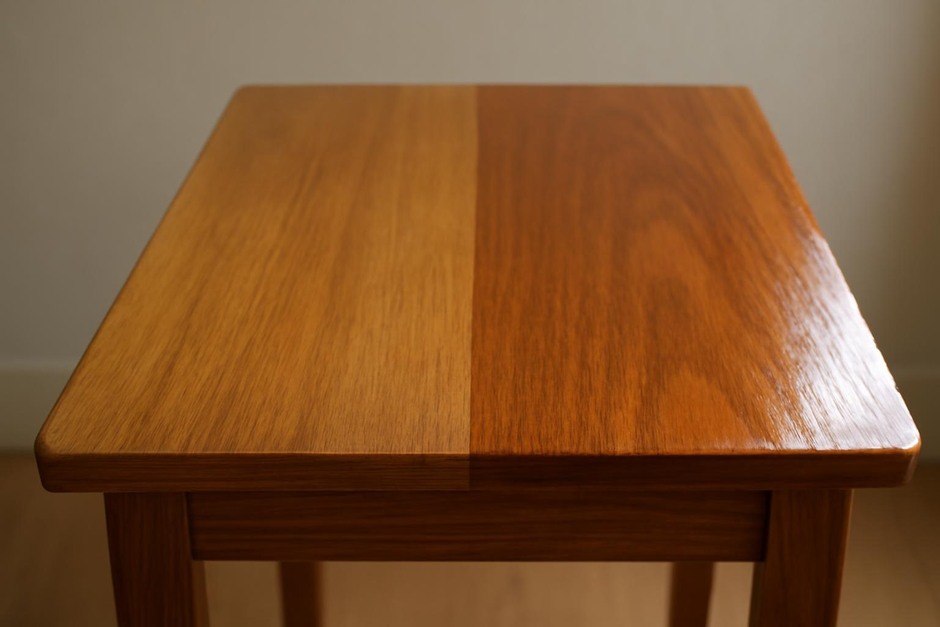
The choice shapes the character of a piece. Objects made largely by hand carry subtle tool marks and a sense of time spent; machine work can emphasize precision, symmetry, and forms that are difficult to achieve by hand.
How to decide: a practical guide
Choosing between hand and power tools isn’t binary. The best decision follows from clear answers to a few questions about your situation and aims.
1. What are your goals?
- If you want to produce many identical items or work on thick rough stock regularly, power tools will save time.
- If your purpose is study, learning craft techniques, or making one-off objects with subtle surfaces, prioritize hand tools.
2. What kind of space do you have?
- Small, shared, or noise-sensitive spaces favor hand tools or small benchtop machines with dust management.
- Dedicated garages or workshops can accommodate larger stationary tools and the ventilation they require.
3. What is your budget and tolerance for maintenance?
- Start with a modest set of sharp hand tools if funds are limited; you’ll develop sharpening and setup skills that pay dividends.
- If budget allows and your projects demand it, invest in one or two versatile power tools—tablesaw or bandsaw—and learn safe setups and jigs.
4. Do you want a hybrid approach?
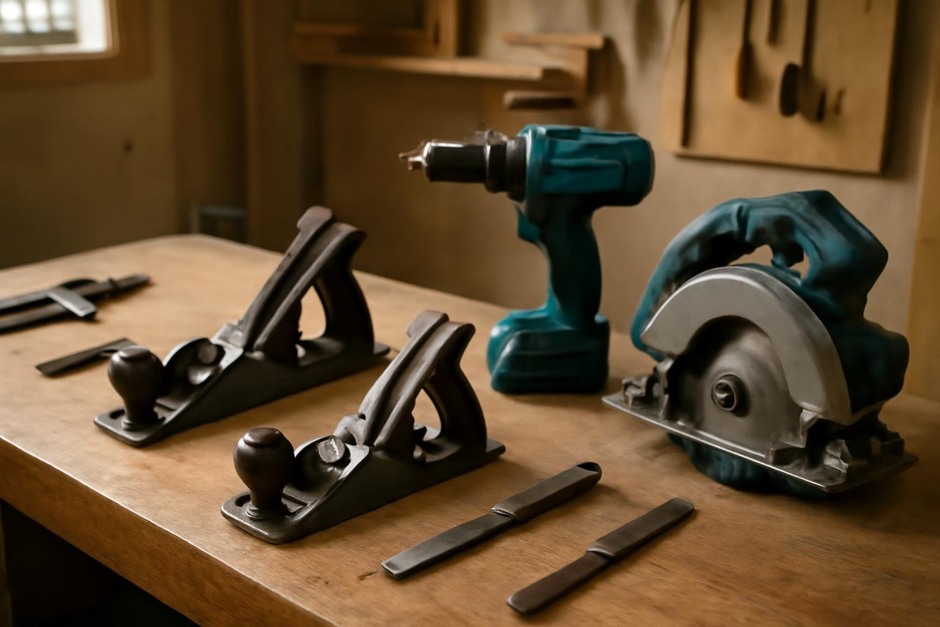
Many makers find the sweet spot is hybrid: use power tools for roughing out and hand tools for final fitting and surface work. That combination leverages speed without losing the sensory control that refines a piece.
Practical starting lists
- Hand-focused starter kit: bench plane, jack plane or smoothing plane, rabbet or bevel-edge chisels, a handsaw, a marking gauge, sharpening stones.
- Power-assisted starter kit: compact benchtop bandsaw or circular saw with a stable guide, a random-orbit sander, a plunge router or benchtop drill—combined with a plane and a set of chisels for finishing.
In the end, the choice reflects practical constraints and the kind of relationship you want with material and time. Whether you favor the quiet logic of hand work, the disciplined speed of machines, or a mix of both, each approach carries a lineage of techniques you can adopt thoughtfully.